Sinew
technical overview · 2026
[ video → force ]

The missing
modality.

We recover contact force from ordinary manipulation video — turning vision-only robot datasets into contact-rich training data for large-scale policies.
the bottleneck

Robot manipulation is more impressive every month — and still data-bound.

Dexterous hands, humanoids, and general-purpose policies keep getting dramatically more capable. Yet every leap still rides on the same fuel — more demonstration data. The bottleneck is not architectures or compute.
Capability is exploding
Manipulation foundation models, RL, and imitation learning produce genuinely impressive behaviors — and improve month over month.
Still data-bound
Every gain tracks demonstration data. Robotics rides the same scaling curve as language and vision.
Real data is scarce
Physical demonstrations are slow and costly to collect. Supply — not cleverness — is the hard constraint on capability.
Data is the moat
Whoever controls the data pipeline controls the policies built on top of it.
why data
02 / 15
the gap

But almost all of that data is vision + actions — nothing else.

Open X-Embodiment, DROID, BridgeData — vast camera + action corpora, but never the force.
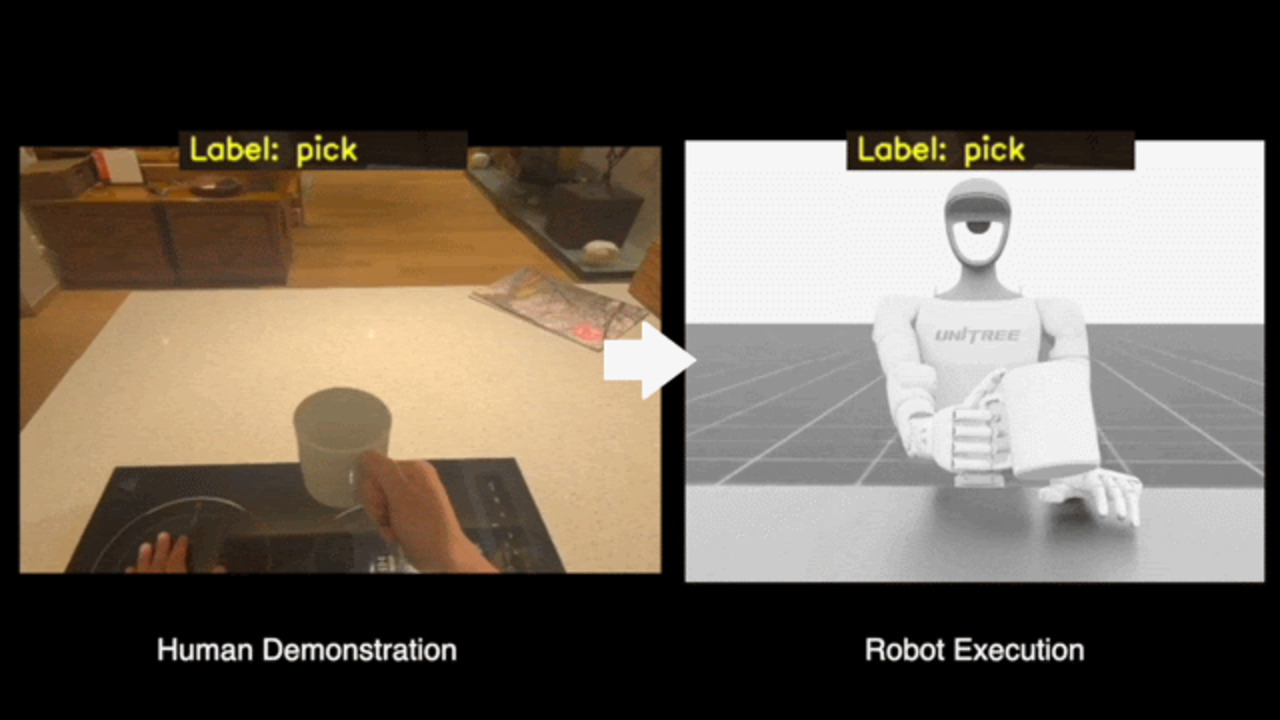
A typical demonstration: egocentric video + actions — and nothing else.
What gets recorded
RGB video and robot actions / proprioception. Cheap, standardized, and easy to collect at scale.
What's missing
Contact force & torque — the physical result of every touch. Almost never captured, and it can't be added back later.
the gap
03 / 15
why force

Vision tells you where. Force tells you what happens.

Contact-rich manipulation is won or lost at the instant of contact — exactly when cameras occlude.
Touch is what closes the loop on contact.
Contact is invisible
Peg-in-hole, assembly, and dexterous grasping are sub-millimeter and force-driven. Cameras can't see the moment that matters.
Force carries the signal
Slip, compliance, and contact dynamics live in force / torque — not in pixels. It is the modality vision-only data can never supply.
why force
03 / 15
what we do

We recover force from video — for robot learning.

A self-supervised foundation model that turns ordinary manipulation video into per-frame contact, direction & magnitude — one unified tactile representation, trained on the largest paired video+force corpus available.
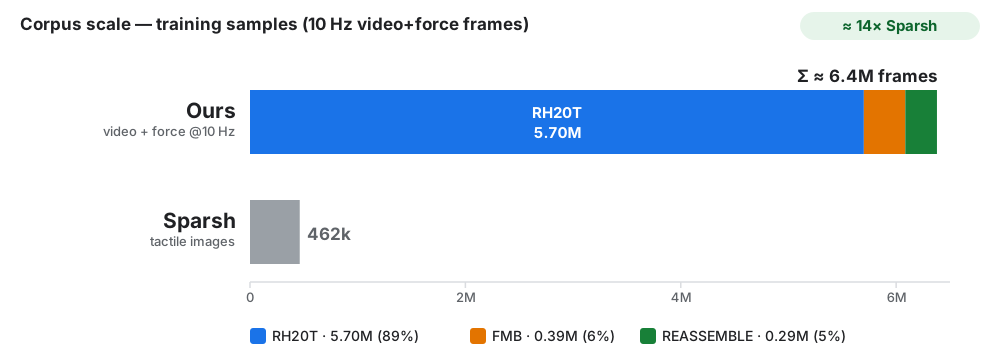
Corpus scale vs Meta Sparsh — about 14x larger
Largest corpus · ≈ 14× Sparsh
The biggest paired video + force corpus we know of — versus Meta FAIR's Sparsh.
No sensor, no re-collection
Force is recovered from the pixels you already have — nothing new to instrument.
Companies bring the video. We add the force.
what we do
05 / 15
market

A huge market — with a force-shaped hole.

TAM
$38B · humanoid robots by 2035
SAM
$9.2B · robot data & labeling by 2033
SOM
force / haptic data — ~$0 sold today

Goldman Sachs (TAM) · Mordor/Grand View, ~21% CAGR (SAM). Force is the highest-value, lowest-supply slice.

  • The market prices data by the labeled hour (~$118/hr) — and nobody sells force as a product.
  • Full instrumented datasets cost $50–200K and can't be retrofit onto existing video.
  • ~$3B spent on robot data in 2 years — to manufacture what can't be scraped.
market
02 / 10
customers

Who pays — and why now.

01

Data factories

Scale AI ($29B), Mercor ($10B), Lightwheel. Selling robot data by the hour — force is the slice they can't capture. We add it without recapture.

02

Robot-FM labs

Physical Intelligence, Figure, NVIDIA, Skild. Force lifts their exact models (+23% over π0). They hold the budget & feel force-blindness most.

03

Research & verticals

Manufacturing, surgery, service robots. Contact-rich by definition; smaller deals, faster pilots, reference logos.

Demand is implied by the science (force improves policies) but unpriced — we validate willingness-to-pay with a paid pilot (see GTM).

customers
03 / 10
the product, as a business

Two ways to buy the same force layer.

Inference API

Stream in video → get back contact · direction · magnitude, frame by frame. Integrates into any data pipeline. Usage-metered.

real-time-friendlyno hardware to install

Recovered-haptic dataset (DaaS)

We mine un-instrumented manipulation video into a force-labeled corpus and license it. Monetizes the data flywheel directly.

bulk dealsgrows with every customer

We are a generator, not a broker — we manufacture a brand-new label class from video that already exists.

product
04 / 10
pricing & unit economics

Priced against the cost we erase.

  • Don't price vs hand-labeling — force can't be labeled from RGB by a human.
  • Anchor to instrumenting avoided: ~$118/hr teleop, $50–200K per dataset, often impossible to retrofit.
  • Target price $0.005–$0.05 / frame (≈ $5–$50 per 1,000 frames).
  • GPU COGS ≈ $0.0005 / frame (est., V-JEPA encode) → ~90% gross margin.

Comparables

companymodel
Deepgramper-minute speech API
ElevenLabs$11B val · ~$330M ARR · usage API
Specialized AI APIs$0.50–$5.00 / 1k calls

Per-frame is novel → expect buyer-education; gross margin modeled on real inference COGS.

pricing
06 / 10
competition & moat

The force-from-video lane is empty.

whoapproachvs Sinew
GelSight · Meta Digit · Sanctuarytactile hardwareneeds a sensor on the robot
NVIDIA Cosmos · Lightwheelsynthetic datasim, not real contact
"Feel the Force" (academia)tactile glove on humannot video; not a product
Sinewforce from existing videosoftware-only · no sensor

Moat

  • Harmonized multi-dataset pipeline — 16,772 rollouts, 7 embodiments.
  • Proven cross-camera / lab / robot generalization.
  • Data flywheel: every customer's video grows the corpus.
moat
07 / 10
go-to-market

Land a pilot → own the slice → flywheel.

01

Land

One paid contact-rich pilot with a data factory or FM lab → sets a reference price & proves WTP. Seed an open "force-recovered" sample for inbound.

02

Expand

Sell into the least-commoditized slice (force / contact / failure-recovery) the incumbents can't supply. Ride the privacy/regulation tailwind toward recovered data.

03

Compound

Each engagement feeds the corpus → better model → DaaS deals. Data flywheel = durable advantage.

gtm
08 / 10
traction & roadmap

Feasibility done — now de-risk & sell.

contact accuracy
87%
+ generalizes across camera / lab / robot
force corpus
6.4M frames
≈14× Meta's haptic dataset

0–6 mo

De-risk the sim2real visual gap; ship the inference API; first design partners.

6–12 mo

First paid pilots → reference price; publish open sample; DaaS v1.

12–18 mo

Convert pilots to recurring; seed-round-ready revenue & margin.

Honest unknown investors will probe: the sim2real visual gap. We lead on contact + direction; magnitude & render-transfer are exactly what this stage funds.

roadmap
09 / 10
team

Team

Robotics MSc engineers.
Igor

Igor Alentev

Lev

Lev Kozlov

Ivan

Ivan Domrachev

team
14 / 15
who trusts us

Who we have worked with

Academic advisor: Prof. Jee-Hwan Ryu, the father of haptics.
OOJUVR robot learning
SBERhumanoid “Green”
Hyundaiassembly lines
RubitekRL line automation
LGCLOiD · Electronics
OpenDroidsVR haptics
KAIST × BONNhyper-real haptics
KASANDArobots in space
trust
03 / 15
[ contact ]

Let's talk

email · ivan@sinewcore.com
telegram · @dom_iva
kakaotalk · dom_iva
phone · +82 10 4819 2048

KakaoTalk QR
KakaoTalk · dom_iva
contact
15 / 15
case 01 · SBER
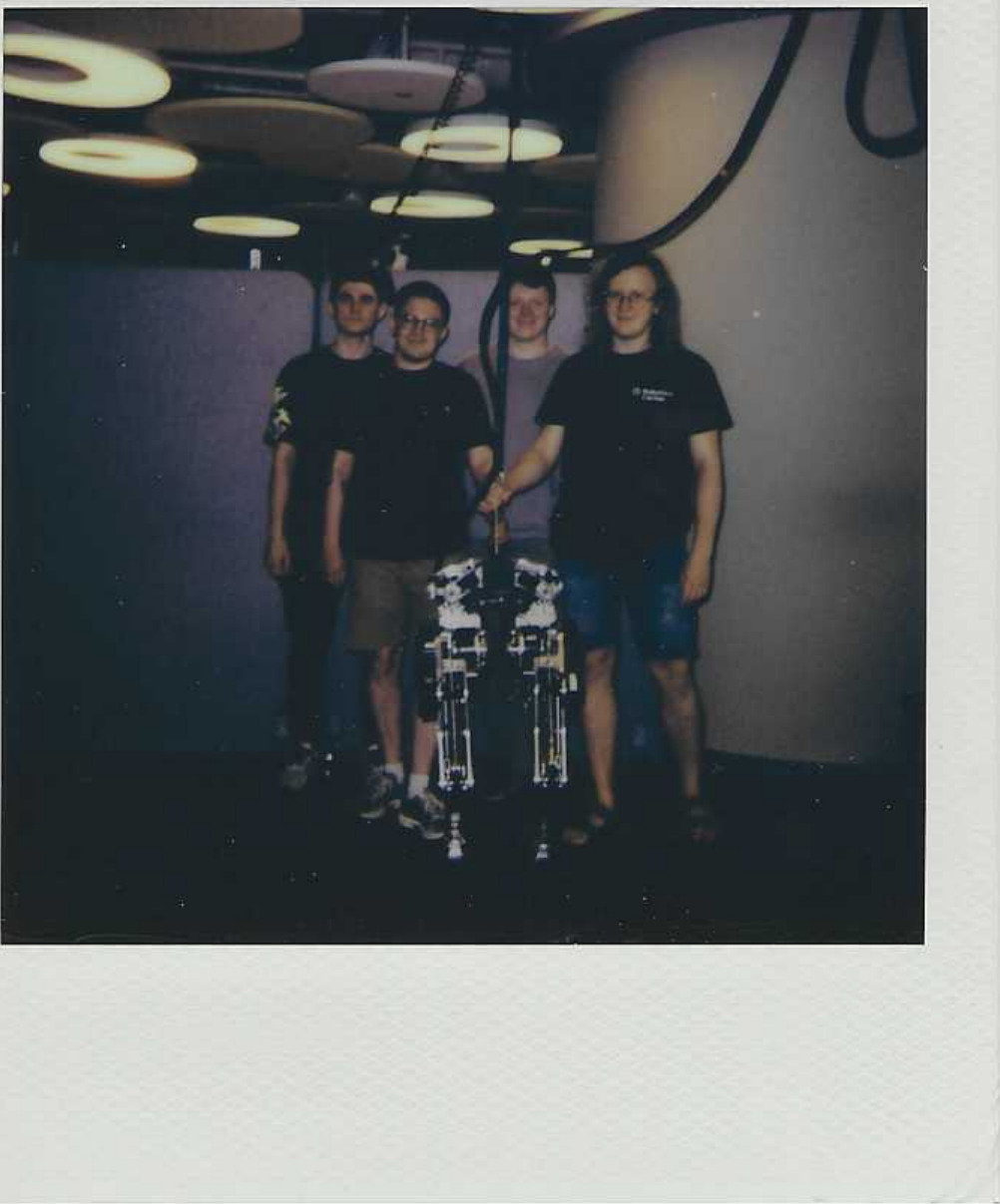
SBER “Green”

SBER
humanoid “Green”

At the origin of Russia's leading humanoid.
  • Locomotion and optimal control, RL
  • Validation on full-scale hardware
  • Python / JAX, high-fidelity simulation
1:1full-scale
platform
↗ sber.ru/robocenter/green
case · sber
04 / 15
case 02 · HYUNDAI
Hyundai

Hyundai
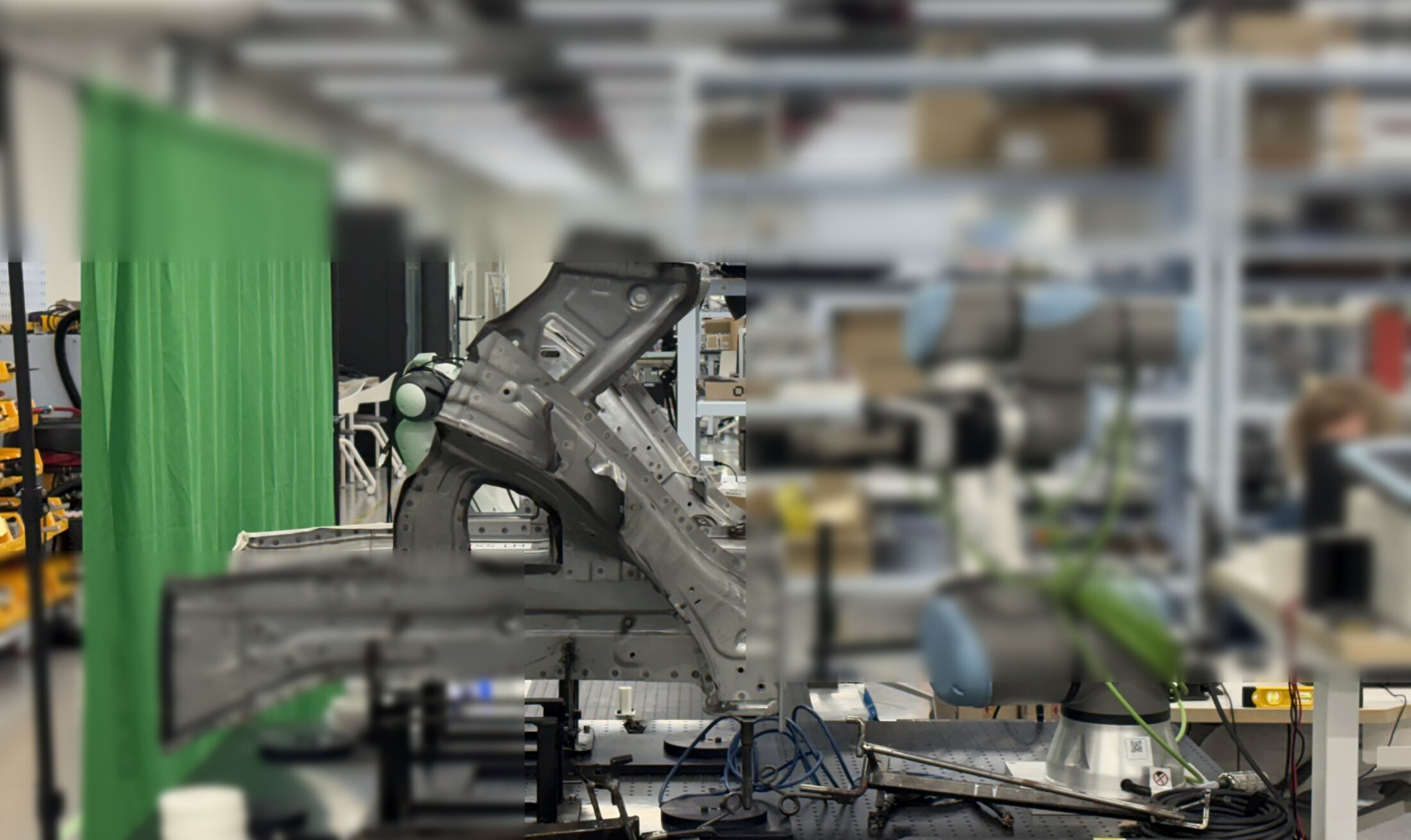
assembly automation

Automation of car body assembly lines.
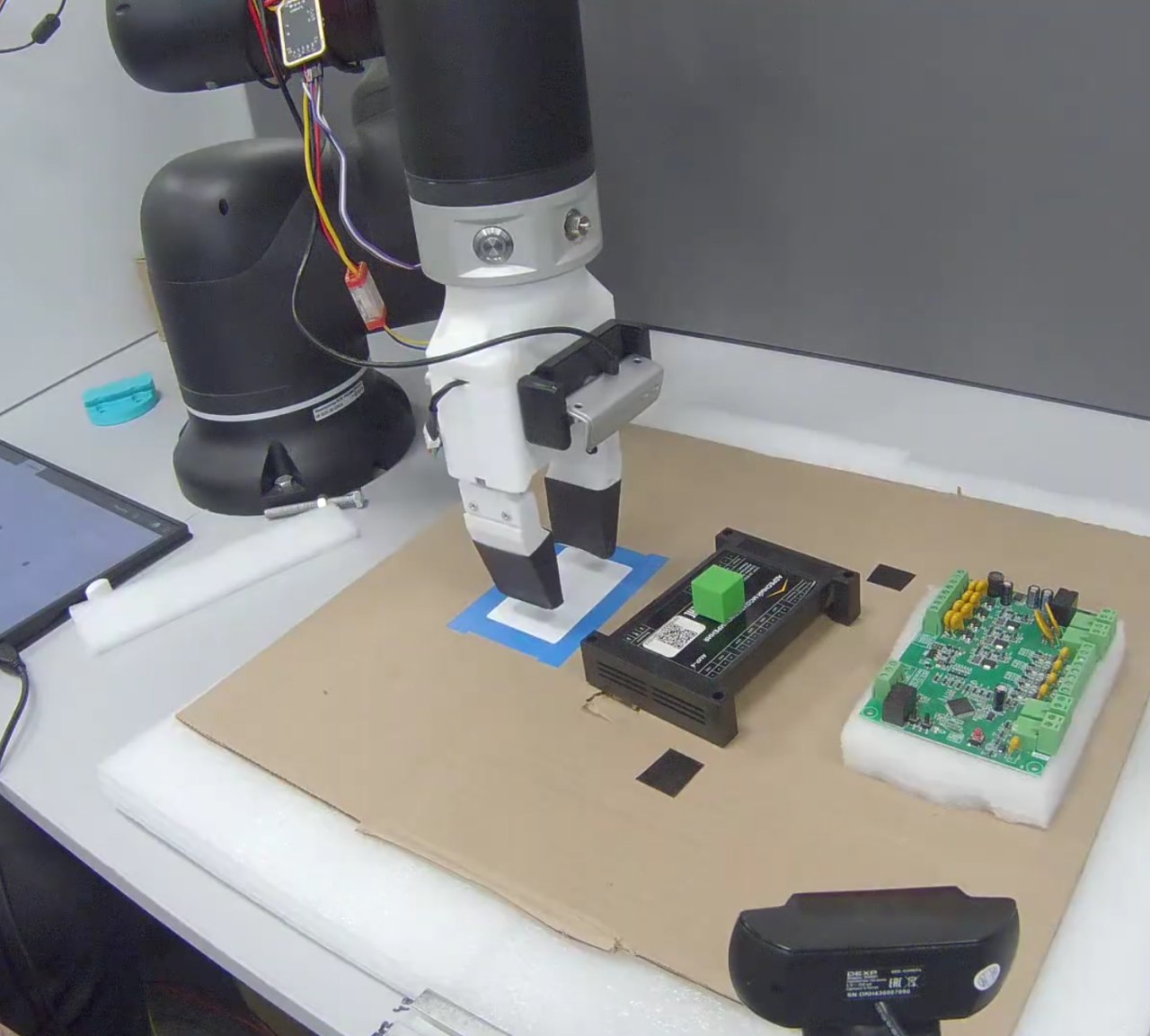
  • RL trained entirely in NVIDIA Isaac
  • Force-aware peg-in-hole under contact
  • Deployed to the factory line (production)
Isaac → factoryproduction integration
case · hyundai
05 / 15
case 03 · LG
LG CLOiD

LG
two projects

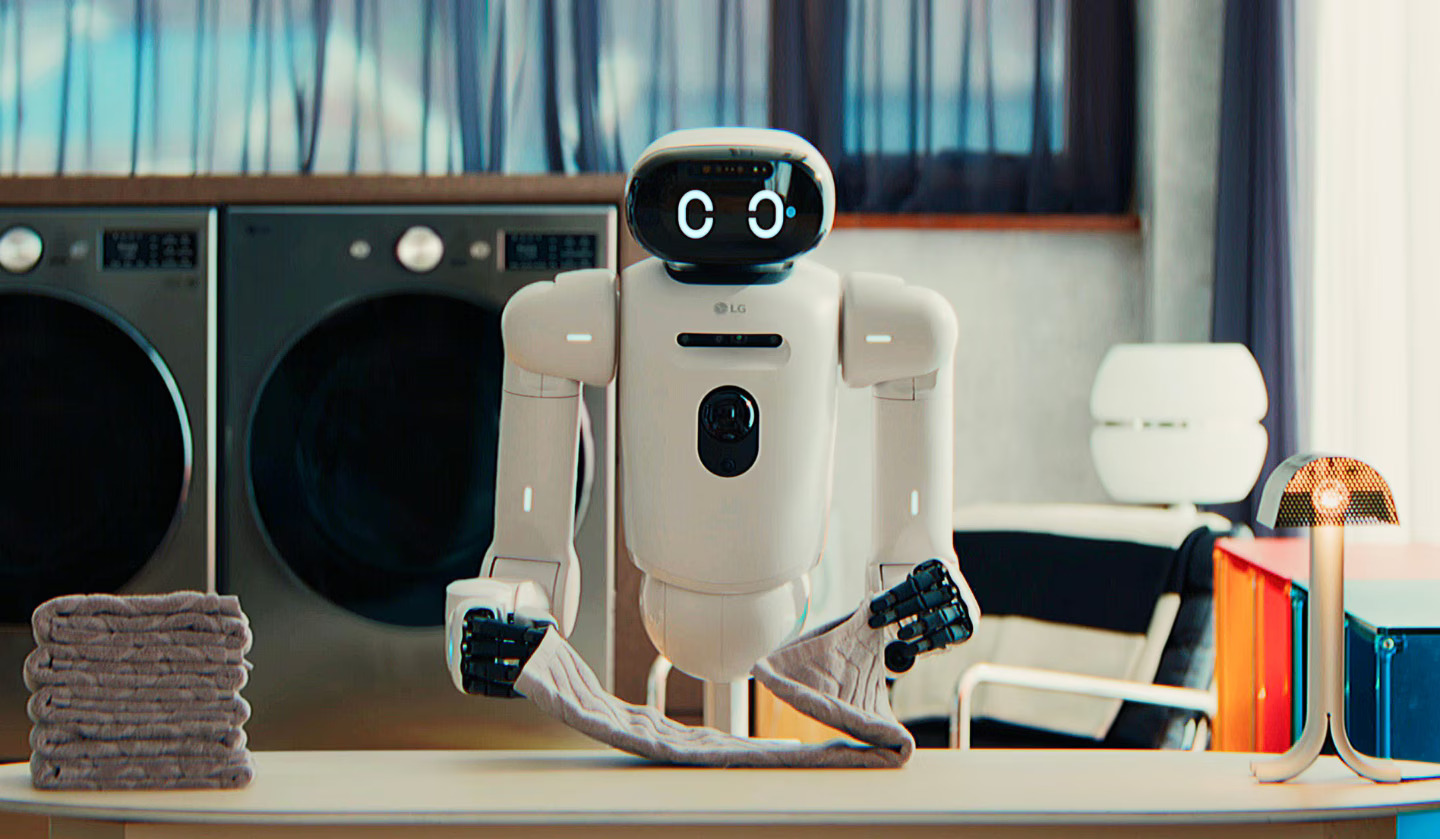
Bimanual humanoid haptics and haptic coaching.
  • CLOiD: bimanual humanoid haptics on a mobile platform
  • Demonstration data collection
  • Electronics: haptic coaching — mocap + IMU + force, Unity VR
bimanualhumanoid haptics
↗ lgcorp.com/media/video
case · lg
06 / 15
case 04 · OPENDROIDS
OpenDroids

OpenDroids
VR haptics

Haptic cockpit with immersive VR perception.
  • Meta Quest 3, robot state streaming
  • 3D perception (LiDAR) in VR
  • ROS2 / ZMQ transport
<50 msremote manipulation
latency
↗ opendroids.com
case · opendroids
07 / 15
case 07 · OOJU
OOJU

OOJU
robot learning via VR

Startup ooju.world. Data collection and training of robots and foundation models.
  • Demonstration and data collection in VR
  • Training robots and foundation models
  • Pipeline: data → policies
ooju.worldVR → policy learning
↗ ooju.world
case · ooju
10 / 15
case 08 · RUBITEK
Rubitek

Rubitek
line automation

Production line automation with AI policies.
  • Real-world reinforcement learning
  • Imitation learning
  • Deploying trained policies to the line
real-world RL+ imitation learning
case · rubitek
11 / 15
case 09 · FLEXAM
Flexam

Flexam
additive manufacturing

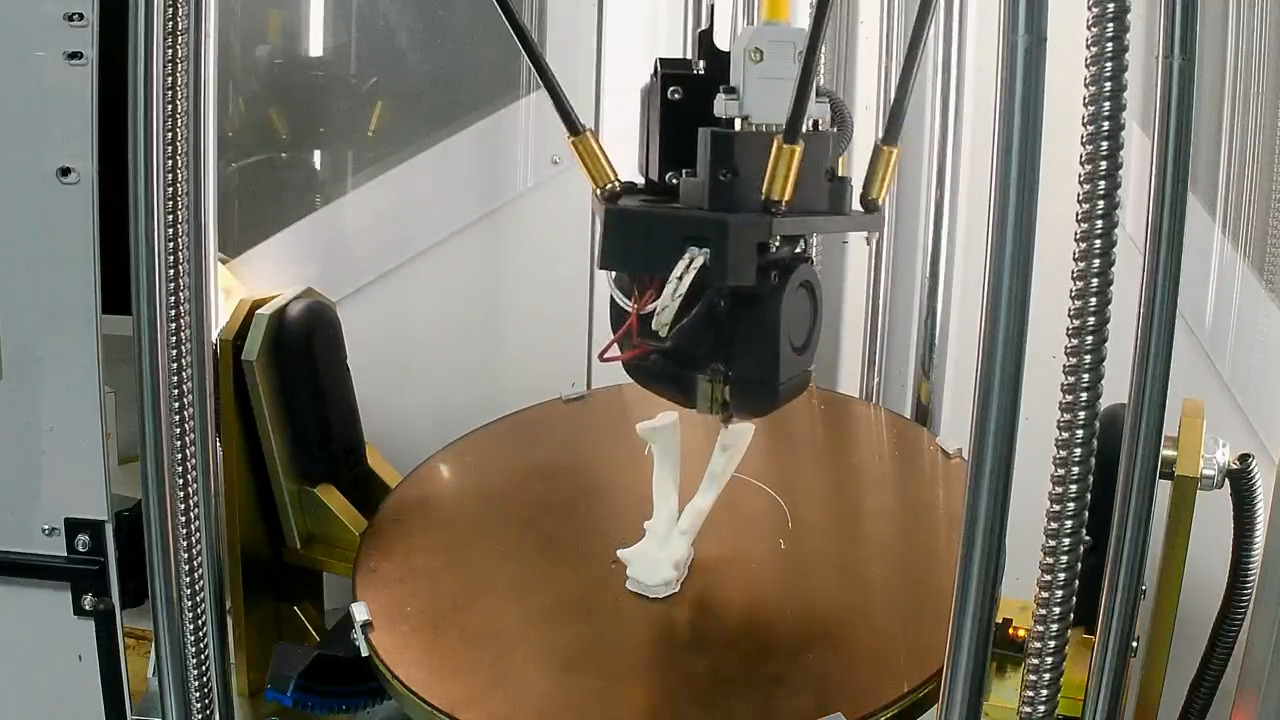
Startup. Multi-axis slicing and ML for 3D manufacturing.
  • Multi-axis slicer for additive manufacturing
  • ML pipelines for 3D-model analysis
  • Agentic-driven pipelines
multi-axisslicer for AM
↗ flexam.tech/use-cases/medical
case · flexam
12 / 15
case 06 · KASA
[NDA]details withheld

KASA
Korea Aerospace Administration

Haptics and autonomous robot operation in space.
  • Our team's current project
  • Most demanding environment — haptics + autonomy
UNDER NDAdetails not disclosed
case · kasa
09 / 15
case 05 · KAIST × BONN
KAIST × BONN

KAIST × BONN
hyper-realistic haptics

International consortium, Germany × Korea.
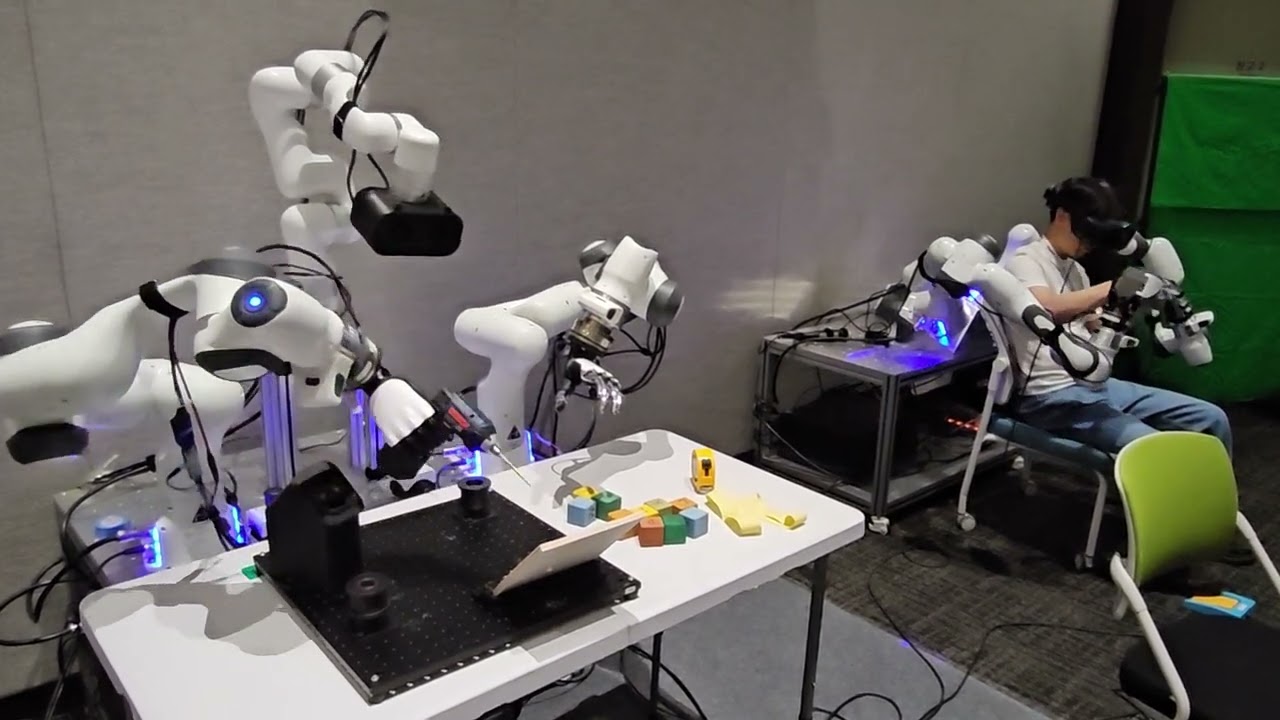
  • VR-headset retargeting, force / tactile feedback
  • Custom CUDA drivers, 4K codec over distance → VR
  • Configuration close to a humanoid (bimanual + hands)
4K CUDAlow-latency
video stream
↗ youtu.be/mqlA038TQk0
case · kaist × bonn
08 / 15